We live in a technologically rapidly developing and turbulent world of various challenges and problems at corporate, national, regional, social, and personal levels. We cannot solve most of these issues alone because, due to the complexity and interdependence of several stakeholders, they require their involvement and collaboration.
Today popular digitalization and various »smart technology buzzword concepts" cannot generate real value for all involved stakeholders if not underpinned by business and project excellence requirements. These challenges must be holistically observed and simultaneously addressed from the business, technical, organizational, and behavioral aspects. The project and business excellence standards warrant that all related questions are adequately addressed. Unfortunately, these excellence questions are, in most cases, not properly managed.
One of the most important critical success factors of business success nowadays is partnership and collaboration between various value chain business actors at the regional, national, and global levels. The general awareness that it is necessary to establish various forms of partnering and collaboration has existed for many years. Mostly in theoretical articles and books, records of different professional reports and development strategies, and in the vocabulary of popular business gurus and daily politicians. But how much of this kind of partnership and collaboration exists in reality? If we analyze present environments and the global situation, we can find much of this in words but not so much in practice.
We can conclude this introduction with Gerald Celente's statement published in his book titled »Trends 2000« (1998). He wrote:»To futurists, advances in technology are equated with advances in civilization. Intellectually sophisticated, philosophically naive, the futurists live in a world where new equals better«...
LENS Living Lab provides know-how, pilots, and test bed for industry-partnering research and innovation initiatives
With the LENS Living Lab's regional and global partners, we have nearly a quarter of a century of experience establishing and developing various forms of partnership across multiple R&D programs and projects from the areas of ICT, industrial engineering, business modeling, technology innovations, and management of related virtual systems. These experiences gained in this way, supported by our research and development, helped us to build up an internal knowledge base composed of tools and expertise in establishing practical partnership cooperation for the needs of various development challenges.
At the center of our observation are digitalized industry innovation ecosystems, the treatment of various forms of virtual partnering organizations, and their virtual workplaces. This covers observed virtual communities' organizational, digitalization, and behavioral aspects. Virtual communities are groups of people who may or may not meet each other, exchange information and ideas, and work through digital networks.
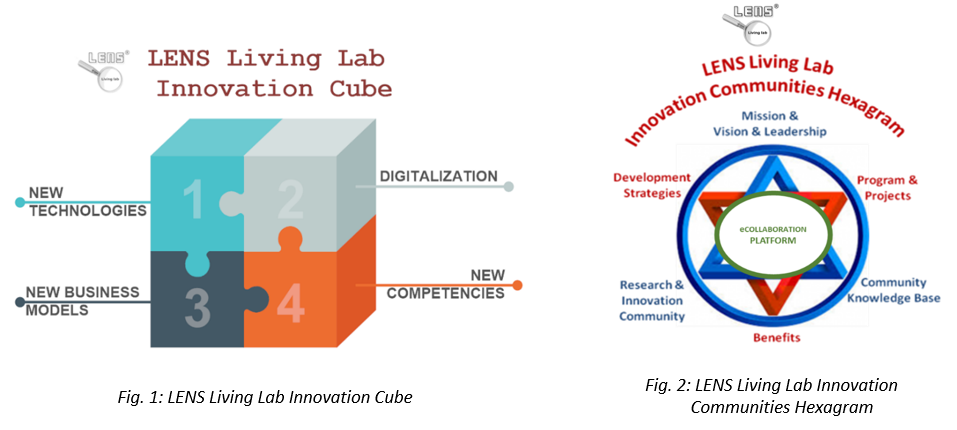
Figure 1 presents the LENS Living Lab's innovation cube. This cube depicts focal areas of our research innovation efforts and support services provided by our portfolio of collaboration platforms, organized as part of LENS Living Lab's innovation and project office services.
LENS Living Lab's partners are companies, research, education, and industry support organizations that provide products, services, technologies, and knowledge for the high-demanded industry partners - value chain integrators.
For the needs of the development of such communities, we have developed know-how, which includes guidelines and IT tools that serve to establish, develop and manage such virtual communities and their digital platforms. Figure 2 illustrates the conceptual framework of our approach titled »LENS Living Lab Innovation Community hexagram«
The New Cloud Computing Service ExArca®, Version 4.0
Collaboration Platforms and their Workspaces Developer
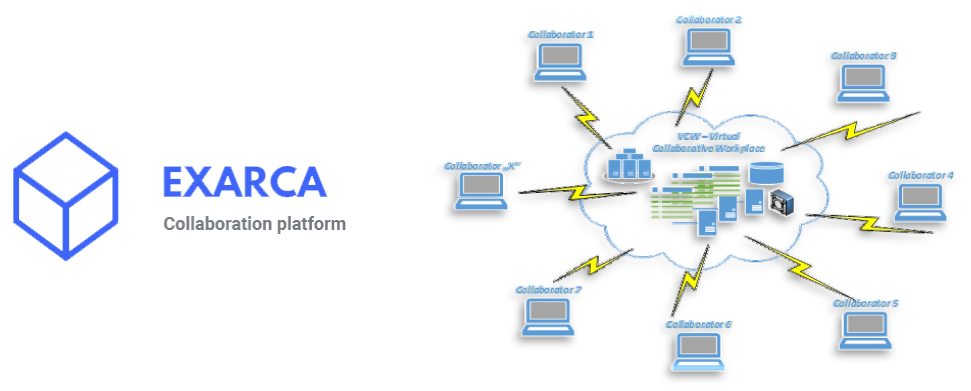
3L ExArca® enables the creation and management of Virtual Innovation Platforms (VIPs) and their Virtual Collaborative Workspaces (VCWs) for the needs of various open and closed innovation communities. VIPs are thematic, internet-based virtual collaborative environments established by one or more business entities to motivate value chain actors and their knowledge communities for information and ideas exchange, collaborative research and innovation projects, and the build-up and development of such innovation communities.
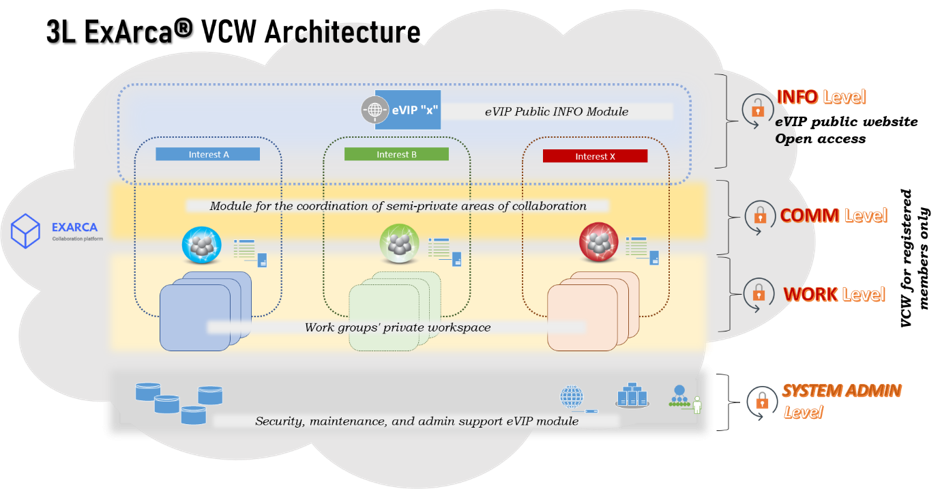
The 3L ExArca® architecture is based on an open innovation funnel, which allows the creation of VIPs for the needs of different innovation communities and their collaboration interests, RTD projects, and programs. The first layer is designed as a community VIP's website and is available to everybody. The second layer is intended for members involved in various collaboration interests and projects. The third layer is designed for working groups or work packages connected to different collaboration interests and projects. This level is accessible and visible to assigned persons only. The fourth level is intended for 3L ExArca® system administrators.
The new ExArca®, Version 4.0, was launched early this year and is available at this link: https://exarca.io
By Luka Semolic, M.Sc.
LENS Living Lab - INTESO Group and
Prof.Dr.Brane Semolic, LENS Living Lab
The main PPiM 4.0 goal is to identify, develop and pilot new management competencies and skills for the needs of emerging environments of Industry & Society 4.0.
The existing portfolio of the PPiM 4.0 program comprises six research-innovation projects proposed and coordinated by LENS Living Lab partners participating in this program.
The following two projects are part of the PPiM 4.0 program. The first TINAP is connected to the SCRUM project "Partnering in Innovation and Creativity with Denmark Case Study. " The second report is related to the SCRUM project »Change and Transformation Needs in Industry 4.0 for Management Consulting Services«, coordinated by LENS Living Lab partner from India.
By Prof.Dr.Brane Semolic
LENS Living Lab
Contact: info@3-lab.eu
SCRUM Project Business Case
TINAP was founded a few years ago by the Danish engineer Finn E. Olsen, who had experienced several deaths in his close circle caused by prostate cancer.
TINAP is today organized in a non-profit association formed by motivated volunteers who want to find new radical, innovative ways to illuminate the cause of cancer.
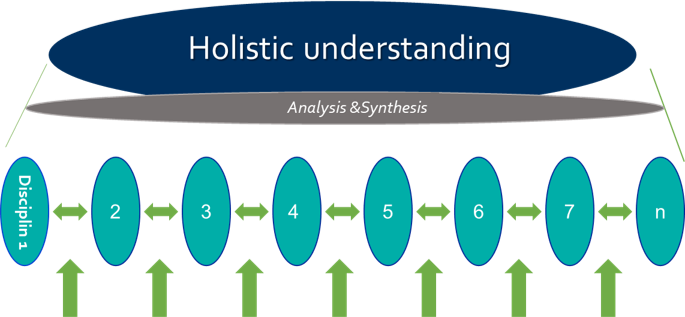
TINAP bases its research and methodology on transdisciplinary or transdisciplinary work. Transdisciplinary work is more inclusive in terms of knowledge and methods than ordinary interdisciplinary work because transdisciplinary work transcends paradigm boundaries.
Usually, scientific work cannot transcend paradigm boundaries because a paradigm is a self-affirming, completed, and complete area of knowledge seen from within. Paradigms, therefore, are difficult to falsify.
The TINAP project is aware of this challenge in its work to actively bridge the gap between different sciences and paradigms.
This version of the method document has been updated about the theme-oriented approach used today.
The understanding of the innovation process as an analysis-synthesis process is unchanged.
The original method and idea were based on the belief that the solution to the riddle of prostate cancer already existed and is inferred by elucidating interdisciplinary and interdisciplinary knowledge about the prostate.
This belief has been departed from as a consequence of the explanatory model of the human organism as a control system (Olsen, 2021).
The explanatory model shows that the complexity of the human organism is so overwhelming that one will probably never be able to understand all contexts.
If this is true, it may explain why no significant progress has been achieved in understanding cancer since President Nixon declared a "war on cancer" 50 years ago (Vertes, 2011).
If that's true, perhaps that's why current causal treatment for prostate cancer is still based on an 80-year-old theory of testosterone as the culprit. (Hodges, 1941)
If the causes of prostate cancer lie outside existing biochemical and health science knowledge, it will be unlikely to ever find them with existing methods based on the explanatory model.(Olsen, 2021)
the human organism is so complex and diverse that an understanding of causes and contexts requires a transdisciplinary approach.
Understanding new contexts and achieving holistic understandings requires the effective acquisition relevant knowledge and an advanced synthesis of this.
By synthesis is meant the art of finding patterns.
TINAP will develop hypotheses and preferably radical new hypotheses that can be published and be guiding stars for cancer research
TINAP makes all knowledge available to everyone in an open innovation environment.
This summary is taken from the document TINAP Method version 7.7, prepared by Finn E. Olsen.
By Prof.Leif Henriksen
LH Consult, Denmark
Contact: info@tinap.org
SCRUM Project Business Case
Management consulting practices have been undergoing radical changes in view of fast changing business environment including technology, competition, concerns for environment as well as sustainability issues. The industry 4.0 environment triggered new business models based on new technologies. Businesses are also required to manage their enterprise for compliance for ESG to ensure their long-term survival and growth. The challenge therefore, is to understand the relevance of practicing management consultants under these new business environments. Businesses are undergoing digital transformation. The 4th Industrial Revolution could also lead to more companies employing specialist contractors or remote workers. It may also contribute to the increase of poverty and hunger and to the widening of income and social inequality. These changes will throw up new challenges. Large management consulting firms like McKinsey have been developing the new capabilities to serve the industry requirement more effectively.
To understand the implications of these changes on management consulting practices, a global survey using a structured questionnaire ( refer to the link ) was conducted to capture the current thinking of the top management across industries and geographies. The survey so far has captured about 55 responses from across the globe from senior executives at the level of GM and above and it is still continuing. The survey also attempted to testify few hypotheses. Based on the responses so far captured we could draw some inferences as below:
Internal capabilities of the businesses are not sufficient to address the implications of Industry 4.0 technologies and they need services of the consultants to help them sail through new challenges.
Existing management consultants and project consultants need to develop new capabilities to be relevant in changed business environment. There has to be a new breed of management consultants for current business needs triggered by these new challenges.
Traditional services of Management consultants in functional lines are seen to be becoming obsolete and redundant and all businesses are now focused on future. As such current certifications and standards need changes to capture the need of the current business environment.
The survey questionnaire is appended below with a request to all our readers to fill it in. Your valuable input will be very helpful for our research:
Project Coordinator: University of Maribor
Project website: https://digi-si.eu/
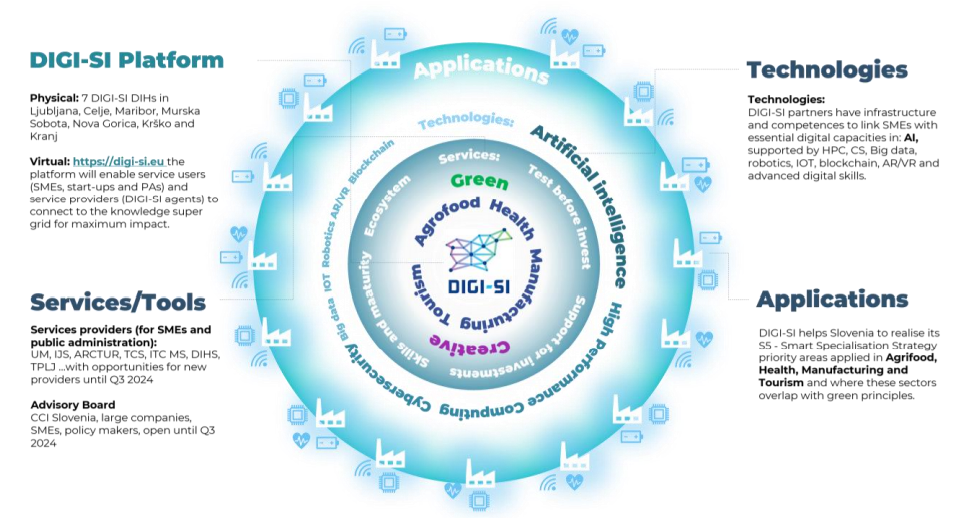
DIGI-SI will foster the digital transformation of Small and Medium-sized Enterprises (SMEs), start-ups, scale-ups and Public Administration (PAs) in four strategic priority areas identified in the forthcoming Slovenian smart specialisation strategy (S5): Agri-food, Health, Tourism and Manufacturing. The consortium consisting of seven partners with proven complementary expertise in digital transformation support, will take advantage of the existing resources and provide a single point of contact in all four priority areas of Digital Europe Programme: Artificial Intelligence (AI), High Performance Computing (HPC), Cyber Security (CybSec) and Advanced Digital Skills (ADS). DIGI-SI also offers SMEs/PAs additional technology services within Robotics, Internet of Things (IOT), Big data, Blockchain and Augmented / Virtual reality (AR/VR). DIGI-SI will deliver digital transformation services on entry, basic, and advanced levels and offer collaboration opportunities to Slovenian ICT players to become our external digital technology/service providers providing complementary services to local and EU companies through the DIGI-SI online shop enabling matchmaking in demand and supply of digital resources.
Project period: 2022-2025
Project funding organization: European Commission, Horizon Europe Program Source: Project DIGI-SI application
The CCR & DIGITECH Consortia is a partner in the DIGI-SI project, responsible for the manufacturing area. Our Consortia is formally presented by one of our founding partners - Toolmakers Cluster of Slovenia (TCS).
The LENS Living Lab® - INTESO Group is the CCR & DIGITECH's founding partner. In project DIGI-SI, responsible for developing technology and business scenarios, digitalization technology app demonstration, maturity assessments, scientific coordination, and community governance.
The third founding partner is ETRA Ltd., a specialist in robotic system integration and automatization of industrial processes.
In the DIGI-SI project, our consortia will provide the following services:
Technology and business cases demonstration services,
Verification and validation services,
Digitalization maturity assessment services,
Support to find investments,
Industry technology scenarios and project business case development, and
Innovation community-building support
By Prof.Dr.Brane Semolic
LENS Living Lab - founding partner of CCR & DIGITECH Si East
Contact: info@3-lab.eu
HORIZON EUROPE is key EU's funding program for research and innovation for the period 2021-2027. This program facilitates collaboration and strengthens the impact of research and innovation in developing, supporting and implementing EU policies while tackling global challenges. It supports the creation and better diffusion of excellent knowledge and technologies and boosts the EU's competitiveness and growth.
HORIZON EUROPE program is structured in the following three pillars: Pillar I: EXCELLENT SCIENCE, Pillar II: GLOBAL CHALLENGES & EUROPEAN INDUSTRIAL COMPETITIVENESS and Pilar III: INNOVATIVE EUROPE. Pillar II is structured in six Clusters, out of them the most relevant for LENS Living Lab and its partners is Cluster 4: Digital, Industry & Space. Within this cluster there are ten European Partnerships, including AI, Data & Robotics, Key digital technologies and Made in Europe.
Within Pillar III, most relevant for LENS Living Lab and its partners is the European Institute of Innovation and Technology, composed of nine Knowledge & Innovation Communities, including Manufacturing and Digital.
By Tone Sagadin, M.Sc.
TCS-Toolmakers Cluster of Slovenia - founding partner of CCR & DIGITECH SI-East Contact: info@toolscluster.net
In Memoriam
With great sadness, we want to inform your that prof. dr. Adolf Šostar passed away.
He was a respected, trustworthy member of our team.